







Vomiting
What is vomiting?
Vomiting or ‘throwing up’ is a fairly common occurrence and something that happens to almost all of us over the course of our lifetime. Vomiting is when our body forcefully expels the contents of our stomach, via our mouth and sometimes our nose. While unpleasant, vomiting is one of the ways our body protects itself from what it considers to be a harmful or threatening substance.
What happens when we vomit?
When our body detects a harmful substance or threat, signals are sent to a part of the brain called the chemoreceptor trigger zone (CTZ). If the CTZ determines that vomiting is an appropriate response, it sets off a chain reaction.1
The first thing that happens is your mouth produces extra saliva to protect your teeth from stomach acid that accompanies the vomit. As your body prepares to throw up, major muscles in your diaphragm, chest wall and abdomen all contract at the same time. Usually, a few contractions occur before vomiting, causing you to dry heave.
The epiglottis (a flap in your throat) closes and effectively seals your airway to prevent any vomit from entering your windpipe and lungs. Then, the contractions of the muscles between your neck and abdomen put pressure on your stomach and forces its contents up the oesophagus, into your throat and out of your mouth.
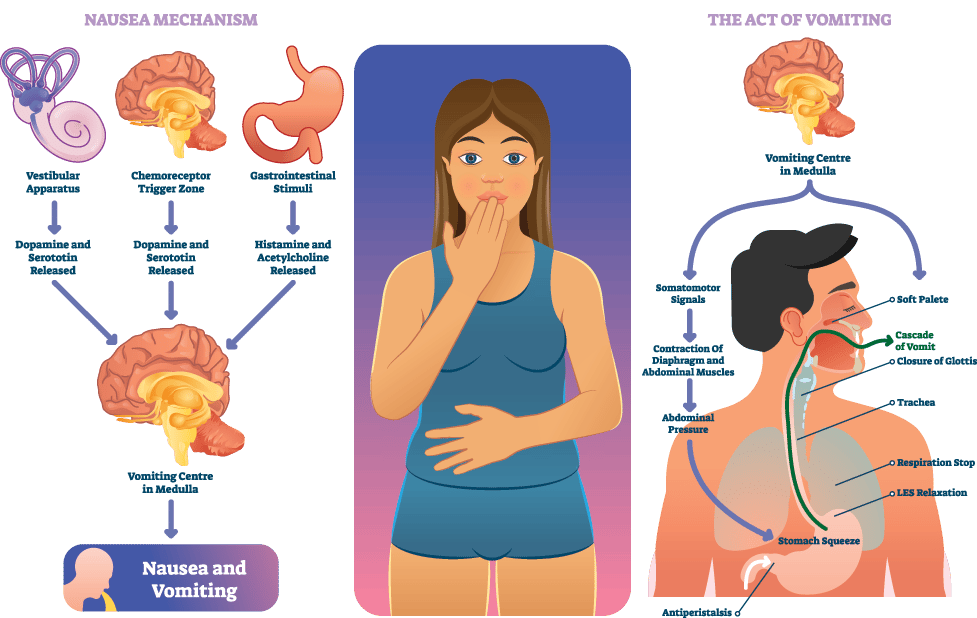

After you’ve vomited, your sympathetic nervous system raises your heart rate, causing you to sweat and rid your body of the extra heat caused by the sudden exertion of vomiting.
What causes vomiting?
Vomiting isn’t a disease in itself, but a symptom of many different conditions. Vomiting can be caused by or related to2 3:
- bacterial or viral infections such as gastroenteritis or ‘gastro’ — one of the most common causes of vomiting in adults4
- foodborne illnesses (i.e. food poisoning)
- motion sickness (i.e. car travel, sea travel, going on rides) or dizziness
- migraine headaches or other intense pain
- intestinal blockage
- indigestion, acid reflux or gastro-oesophageal reflux disease (GORD)
- chemotherapy treatment
- medications such as antibiotics, anaesthesia or morphine
- excessive alcohol consumption
- exposure to toxins
- food allergies
- concussion or brain injury
- pregnancy-related morning sickness
- stress and anxiety
- eating disorders such as anorexia and bulimia
- changes to food and water when travelling overseas
- other medical conditions such as:
o inner ear infections
o vertigo
o appendicitis
o gallstones
o Crohn’s disease
o irritable bowel syndrome (IBS)
o kidney infection or kidney stone
o heart attack
o encephalitis
o meningitis
o brain tumours


What are the signs and symptoms of vomiting?
Sometimes there may be warning signs that you are going to vomit. These may include5:
- feeling nauseous
- becoming pale
- loss of appetite or aversion to food or drink
- cold sweat
- gagging or retching
- increased heart rate
- production of extra saliva or a ‘watery’ feeling in your mouth
- stomach cramps or abdominal pain
- accompanying diarrhoea
How to treat vomiting
Of course, the best way to treat vomiting is to determine what’s causing it, and then treat the cause. Taking anti-nausea medication may help reduce your nausea and the urge to vomit. However, sometimes the best treatment for your vomiting is letting nature take its course, so your body rids itself of the toxin. This is particularly the case for gastrointestinal illnesses or food poisoning. If you’ve vomited you should6 7:
- rinse your mouth to neutralise any stomach acid left in your mouth which could damage the enamel on your teeth
- have a shower and dress in clean, comfortable clothing
- apply a damp washcloth to your head
- take regular, small sips of water, or diluted apple juice
- drink ginger tea which may help relieve nausea
- replace electrolytes by using oral rehydration products such as drinks or icy poles
- avoid sugary, alcoholic or caffeinated drinks, including sports drinks
- avoid solid food until the vomiting stops
- eat bland foods such as crackers, dry toast or rice when the vomiting has passed
- rest


Sometimes it may be appropriate to take medication, either over-the-counter (OTC) or prescription, to relieve symptoms of nausea. This may be the case for:
- migraine-related nausea
- motion sickness
- nausea related to cancer treatment
There are many medications that can relieve nausea and vomiting, so speak to your TerryWhite Chemmart pharmacist about your symptoms so they can recommend the right medication for you.
Because vomiting may be a symptom of a contagious illness such as gastroenteritis, you should also take these precautions to prevent infecting others, until you are sure about what has caused your vomiting8:
- assume that vomit is potentially infectious
- clean up any surfaces that have been contaminated with vomit, thoroughly wash the area with hot water and detergent, and disinfect the area
- assume that any accompanying faeces are also infectious
- wash your hands thoroughly after using the toilet
- stay away from other people
- avoid preparing food for, or caring for other people. If gastroenteritis was the cause of your vomiting, you should follow these precautions for 48 after the vomiting or diarrhoea stops
Complications of vomiting
The biggest complication associated with vomiting is the risk of dehydration, as vomiting causes you to expel fluid along with the contents of your stomach. Dehydration is particularly serious for infants and young children. Signs of dehydration include9:
- dry mouth or lips
- fatigue
- dark urine
- decreased urination
- headache
- confusion
- sunken eyes
- rapid breathing or pulse
- sunken fontanelle (soft spot on the baby’s head) in infants


When to see a doctor
Vomiting associated with food poisoning or gastro usually resolves itself without medical treatment. However, as there are numerous conditions that can cause vomiting, sometimes it may be necessary to seek medical attention. Some vomiting is a symptom of a medical emergency such as such as heart attack, blockage of the intestine, chemical exposure or medication overdose. You should call an ambulance (000) if you notice any of the following in conjunction with vomiting10:
- chest pain
- severe abdominal pain or cramps
- high fever
- stiff neck
- blurred vision
- confusion
- poo in your vomit
- bleeding from the rectum
- you have swallowed or been exposed to something poisonous, or you have overdosed on medication
You should visit your doctor if11:
- you have been vomiting for more than two days
- you are dehydrated
- you have a severe headache
- you have been unable to keep down fluids for more than 12 hours
- you are vomiting bile (a green fluid)
- there is blood in your vomit
- you experience abdominal pain
- you have diabetes, especially if you take insulin
Preventing vomiting
Not all cases of vomiting can be prevented. However, you can take the following steps to reduce your risk of becoming sick with gastro:
- wash your hands thoroughly or use hand sanitiser after using the toilet, changing nappies, caring for someone who is sick, cleaning contaminated surfaces or handling rubbish
- wash your hands thoroughly before and after preparing food
How TerryWhite Chemmart can help
There are multiple conditions that can contribute to vomiting, including medication. We can help you manage your health with a Medication Review with one of our pharmacists. They can assess medication you’re currently taking to determine if it may be contributing to your symptoms, and make recommendations based on what may be best for you. We can also provide advice as to which OTC medications and pharmacy products may be appropriate to help relieve your symptoms of vomiting.
Book a Medication Review at TerryWhite Chemmart today.