

Skip to content
TerryWhite Chemmart
Hero Image

Warts

Warts are small, harmless lumps of skin that appear on the body. The average size of a wart may range from one to 10 millimetres and they may appear singly or in clusters.

They are fairly common, especially in childhood with around 20% of children having them. Those aged between 12 and 16 years are most commonly affected.1

Most wart infections disappear without treatment.

What causes warts?

Warts are caused by a virus known as the human papillomavirus (HPV). There are over 100 types of HPV that are responsible for the various types of warts.2 HPV infects the cells in the outer layer of the skin, causing the formation of warts.3

You can get HPV from someone who is infected with the virus, either through direct skin contact with them or from contaminated surfaces such as gyms, public pools and communal showers. It can take up to a year for a wart to form after you have been infected with the virus. 4

Types of warts and their symptoms

HPV can cause different types of warts which have different characteristics. These include:5 6

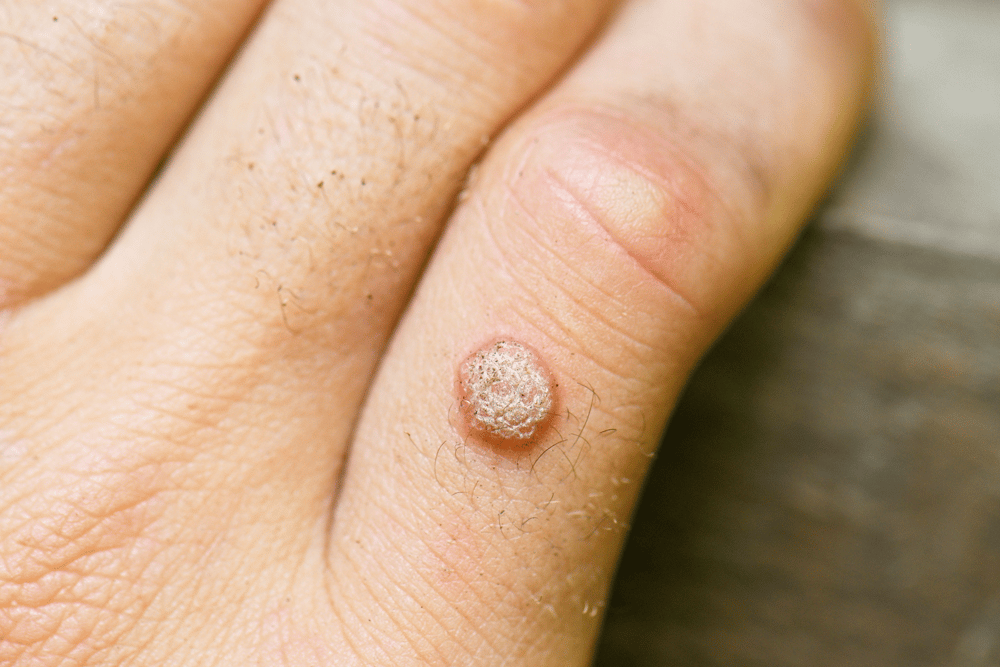
Common warts (verruca vulgaris) — These are hard, raised lumps with a rough, grainy appearance and a round top. These warts are usually greyer than the surrounding skin and are mostly found on the knees and hands.

 Flat warts (verruca plana) — Appearing as smooth, flattened lumps these warts can be pink, brown or slightly yellow. They most commonly grow on the face, thighs or arms.

 Filiform warts — These resemble long, thin threads and are usually found around your mouth, nose or eyelids.

 Mosaic warts — Mostly found on the hands and soles of the feet, these look like a tight cluster of warts.

 Plantar warts — These grow on the soles of the feet and grow into your skin, not out of it. They look like small hard bumps with a black dot on them.

 Periungual warts —These grow under and around the toenails and fingernails. They can be painful and affect healthy nail growth.

 Genital warts — These warts are sexually transmitted so most commonly affect the penis, vulva and anus. They appear as grey or off-white lumps with a cauliflower-like appearance. Genital warts are caused by a different family type of HPV than ordinary skin warts and may lead to the development of vulval and cervical cancer.7 Ordinary skin warts do not cause cancer.

Types of warts and their symptoms

How to get rid of warts

Around 65% of warts clear up within two years without any kind of treatment.8 However, as warts can be uncomfortable and ugly, many people opt for treatment. There are several treatments for warts which include at-home treatments and treatments by doctors. These include:

Treatment for warts

There are a couple of at-home treatments for warts which include:9

  • over-the-counter (OTC) freezing treatments kill the skin and allow you to scrape the surface of the wart away
  • topical treatments containing salicylic acid or lactic acid (wart paint); this is an effective alternative to freeze treatments, though may take many weeks to work

You should seek treatment from a doctor if you have warts on your feet and you have diabetes, or if you have warts on sensitive areas of your body such as the face or genitals.

Wart treatment from doctors

Treatment from your doctor may involve:10, 11

  • freezing (cryotherapy) using liquid nitrogen or sprays but this may take up to four months of regular treatment to get rid of the wart
  • laser treatment
  • surgical cauterisation (burning) of the wart or complete surgical removal although less common due to potential scarring
  • immunotherapy, although this can take time

When should you see your doctor?

If you think you have genital warts, you should visit your doctor as these kinds of warts can lead to cancer. You should also see your doctor if:

  • the wart is painful or is bothering you
  • the wart seems infected
  • you have warts on your face or feet
  • you have multiple warts, or they are spreading
  • you have a low immune system
  • you’re pregnant or planning to become pregnant

Can you prevent warts?

You can take precautions to stop warts from spreading.12, 13

  • always wash your hands after you have been in contact with someone who has warts
  • avoid picking, scratching or biting a wart
  • cover warts
  • avoid sharing wart treatments with other people
  • wear shoes in communal showers and around public pools

If you have a plantar wart:

  • change your socks daily
  • avoid sharing socks or footwear with others
  • do not go barefoot in public areas

How TerryWhite Chemmart can help

Your local TerryWhite Chemmart Pharmacist is available to help you manage your health.

Speak to your TerryWhite Chemmart Pharmacist about your warts so we can recommend products and treatments that may be suitable for you, or refer you to a doctor if necessary.

Find a store

Products that may help

Always read the label and follow the directions of use

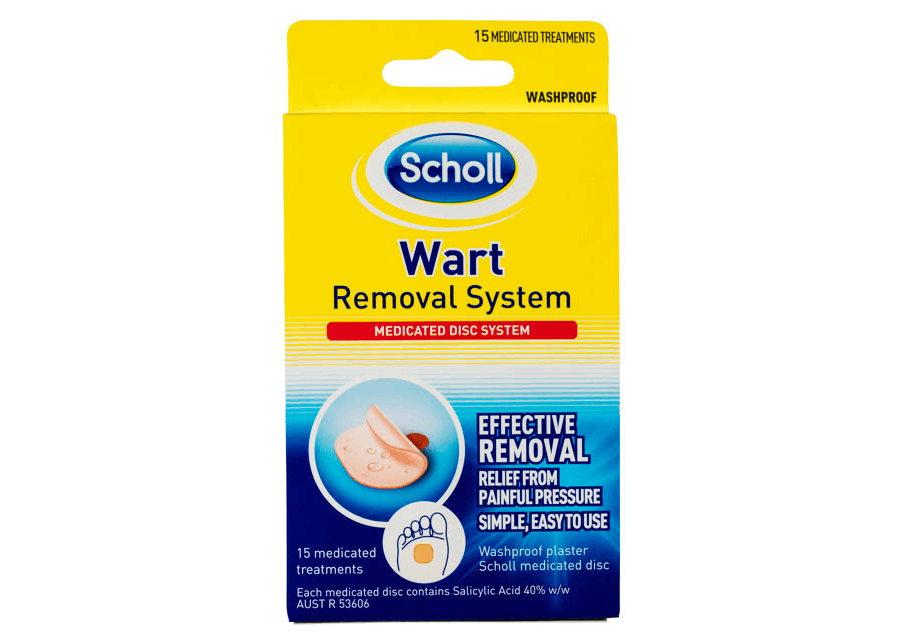
Scholl Wart Remover System Washproof
1 pack

Shop now

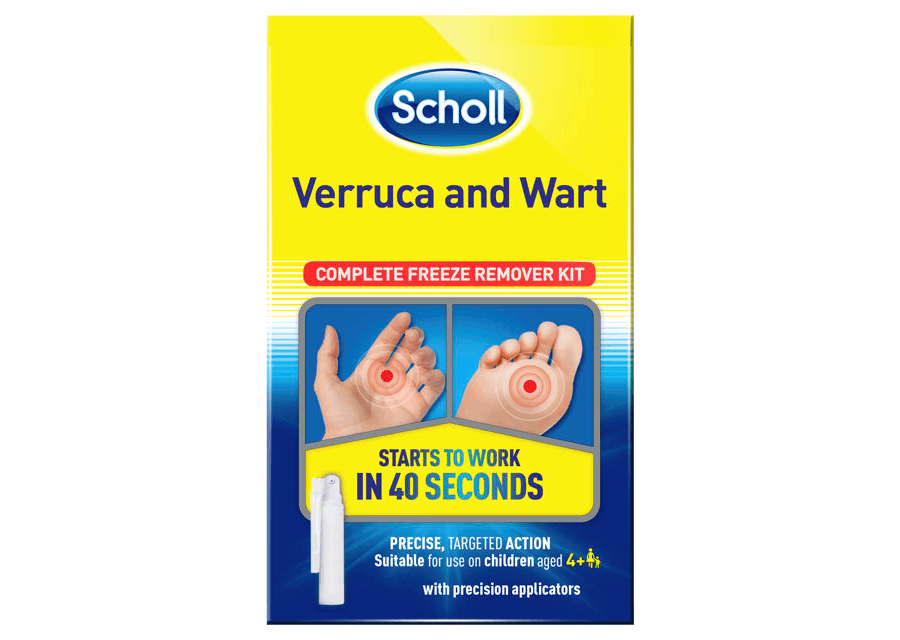
Scholl Freeze Verruca & Wart Removal
80ml

Shop now

Scholl Wart Remover System Washproof 1 pack - Product information

General Information

Scholl Wart Removal System for effective removal and relief from painful pressure.

Scholl Wart Removal System is especially developed for use on warts (also known as verrucae) on both hands and feet.

Contains Salicylic Acid discs which break down hardened skin and ensure that only the specific area is treated, without affecting the surrounding skin.

Made in India from local and imported components.

Use & Dosage

Area should be clean and dry. Remove disc of similar size to the wart and a plaster from the backing paper.

Place adhesive surface of medicated disc directly over the wart (trim if necessary) and cover with the plaster.

Leave plaster in place for approximately 48 hours before removing. Repeat treatment for up to 12 weeks. If symptoms persist, consult a doctor.

Warnings, Storage & Disposal

Store below 25°C in a cool dry place.

Do not use on moles, birthmarks, warts with hair, genital warts, facial warts or mucous membranes. Do not apply if the area around the wart is inflamed or if the skin is broken.

Not to be used by diabetics or in cases of severe circulatory disorders except following doctor's permission and recommendation. Do not apply to healthy skin.

Do not use on babies under 4 weeks of age. Children under the age of sixteen years should seek medical advice before use.

Discontinue use and remove dressing if excessive discomfort or irritation is experienced or if sensitivity develops. For external use only. Keep out of reach of children.

Ingredients

Each medicated disc contains Salicylic Acid 40% w/w

Scholl Freeze Verruca & Wart Removal 80ml - Product information

General Information

Scholl Verruca and Wart Remover Kit removes verrucas and warts in as little as 1 treatment

FAST AND EFFECTIVE: Scholl Freeze Verruca & Wart Remover Kit starts to work in 40 seconds and works by rapidly freezing the wart or verruca. One single treatment can be sufficient however, for more stubborn or persistent warts or verrucas, additional applications may be required

PRECISE, TARGETED ACTION: Scholl Verruca & Wart Complete Freeze Remover Kit has precision applicators which are designed to target only the wart or verruca and avoid surrounding healthy skin. Should form a blister after application and fall off in 10-14 days.

SCHOLL FOOT EXPERTISE: Scholl has over 100 years of expertise and experience in making feet feel better.

Made in USA and Netherlands.

Use & Dosage

Attach applicator to the white plastic cap of can and press down the dispensing button for 5 seconds.

The applicator should be applied to the centre of the wart or verruca for 40 seconds, but no longer.

Disclaimer
General advice only – this information should not replace the information provided to you by your health care professional. If symptoms are severe or persist, please speak to your health care professional. Information current as of date of publishing.‎
Sources:
1Better Health Channel, Warts, https://www.betterhealth.vic.gov.au/health/conditionsandtreatments/warts
2Healthline, Warts, https://www.healthline.com/health/skin/warts
3Healthdirect, How to treat warts, https://www.healthdirect.gov.au/wart-treatments
4Healthdirect, How to treat warts, https://www.healthdirect.gov.au/wart-treatments
5Better Health Channel, Warts, https://www.betterhealth.vic.gov.au/health/conditionsandtreatments/warts
6Healthline, Warts, https://www.healthline.com/health/skin/warts
7Healthdirect, How to treat warts, https://www.healthdirect.gov.au/wart-treatments
8Better Health Channel, Warts, https://www.betterhealth.vic.gov.au/health/conditionsandtreatments/warts
9Healthline, Warts, https://www.healthline.com/health/skin/warts
10Healthdirect, How to treat warts, https://www.healthdirect.gov.au/wart-treatments
11Better Health Channel, Warts, https://www.betterhealth.vic.gov.au/health/conditionsandtreatments/warts
12Healthdirect, How to treat warts, https://www.healthdirect.gov.au/wart-treatments
13Healthline, Warts, https://www.healthline.com/health/skin/warts