







Content sponsored by


Hayfever


Allergic rhinitis, commonly known as hayfever, occurs when the nose and/or eyes come into contact with environmental allergens such as pollens, airborne moulds, dust mites, and animal dander.
If your immune system is sensitive to these allergens, you may experience symptoms like an itchy nose, frequent sneezing, and itchy, watery eyes.
To relieve hayfever symptoms, a combination of products is often recommended. Take our online assessment or talk to your Pharmacist to discover which combination of products can help.
Explore key Hayfever topics below:
Types of Hayfever
Seasonal Hayfever
Symptoms often flare up in Spring, Summer and early Autumn when pollen count from grass, trees and weeds are in the air. Other allergens can include airborne mould spores. Light breezes and gusts of winds can easily trigger seasonal allergic rhinitis.
Perennial Hayfever
This is when symptoms are experienced all year round. Animal dander particularly pet hair, dust mites and moulds are commonly known to trigger perennial allergic rhinitis. The symptoms have been known to get particularly worse at the beginning of pollen season when there are an increased number of allergens in the air.






What are histamines?
Histamines are a chemical released by the body when exposed to an allergen, as part of its immune response. The sneezing, itchiness, runny nose and watery eyes are your immune system alerting you to the allergen.
Join the club
Hay fever is very common, affecting around:
- 1 in five adults^
- 1 in 10 teens^
- Up to 30% of children#
Love a curry?
Turmeric, a yellow spice commonly used in curries, contains an active ingredient called curcumin. Recent studies suggest that curcumin may help with hayfever by inhibiting the release of histamine, which causes allergic reactions, thereby reducing symptoms1.
Next time you're cooking, reach for the turmeric!
What is pollen count?
Since pollen is a cause of hayfever, knowing the pollen count can help you decide when and how much time to spend outdoors.
The pollen count measures the amount of pollen grains in the air. It varies throughout the day based on wind, weather, and time of day, and it also changes with the seasons according to the cycles of different plants and trees. You can check the pollen forecast online or using an app.
- Environmental allergens: pollens from grass, trees and weeds
- Indoor allergens: animal dander, pet hair, dust mites and mould
- Irritants: Diesel exhaust, industrial fuel burning, cigarette smoke, odour from chemicals in cleaning products, laundry detergents, and strong fragrances from perfumes and cosmetics
How high is it where I live?^^
Lower - The east coast has lower pollen numbers – this is because most winds are coastal and the Great Dividing Range provides protection from westerly winds.
Higher - Victoria’s south coast receives northerly winds bringing pollen from grasslands.
Variable - Pollen levels in South and Western Australia vary with the winds.
Hayfever tip
The pollen count is usually higher in the mornings, evenings, after storms and when it's windy.
Hayfever triggers
When allergens present in the air are breathed in through the nose, the nasal passage can become red and swollen.
Here are the most common hayfever triggers to watch out for:
- Environmental allergens such as pollens from grass, trees and weeds
- Indoor allergens such as animal dander, pet hair, dust mites and mould
- Irritants such as diesel exhaust, industrial fuel burning, cigarette smoke, odour from chemicals in cleaning products, laundry detergents, and strong fragrances from perfumes and cosmetics
Common hayfever symptoms
Hayfever can affect your day-to-day living and ability to perform routine activities such as going to work, attending school, playing a sport or going for social outings. For some people, the symptoms are mild and non-interfering. Some of the symptoms can be mistaken for a common cold or the flu, but it is important to note that allergy symptoms tend to persist until treated correctly.
Here are the common symptoms of hayfever:
- Runny nose
- Blocked nose
- Itchy skin and eyes
- Sneezing
- Coughing to clear throat
- Snoring
- Constant sensation of a head cold
Hayfever side effects
When left untreated, hay fever can result in several side effects that can disrupt daily life, including:
- Irritability
- Sleep disorders
- Constant fatigue
- Decreased concentration and lack of focus
- Impaired hand-eye coordination
- Recurrent headaches
- Reduced sense of smell
- Sinus infections in adults
- Ear infections in children
- Decreased productivity at school or work
Other symptoms of Hayfever
Hives (also known as urticaria) is a skin rash characterised by raised welts that appear on the skin. These welts are usually red, pink or even flesh-coloured1 and can range from the size of a pinhead to that of a dinner plate.2 Anyone can get hives, but those who are most at risk are people with known allergies.


Diagnosing Hayfever
If you are experiencing any symptoms of hayfever, speak to your doctor or Pharmacist. It is important to accurately diagnose symptoms for appropriate treatment action and relief.
During the consultation, you will be asked to share your medical history and details about your lifestyle that may help to point towards the cause of the symptoms.
Gaining a better understanding of your work and home environments; as well as the frequency and severity of your symptoms, will help your doctor prescribe the most suited treatment.
After conducting a physical examination, a skin and blood test may be recommended to see how your body reacts to different allergens.
Type of skin tests
Prick test – During this test your doctor will prick your arm with a tiny drop of a common allergen. If the skin gets red, itchy or swollen around the test site, it is highly possible your immune system is sensitive to the allergen.
It is one of the most common types of skin tests and the results are known within 20 minutes.
Intradermal test – In this test, a small amount of a common allergen is injected in the skin using a needle.
It takes about 20 minutes for any reaction indicating sensitivity to allergens to appear at the injected site on the skin.
Hayfever treatment
A variety of treatment options are available over the counter. It is recommended that you always discuss your symptoms in detail with your Pharmacist and share information about any existing medical conditions.
Symptoms can be controlled with medications, but certain medications are only suited to adults. When buying hayfever medications for your children discuss the risks and benefits with your local Pharmacist.
Your Pharmacist may suggest dual-product therapy – where you use more than one product to target different symptoms. Antihistamines are a suitable treatment option for mild symptoms such as a runny nose and sneezing and usually work fast.
In contrast, corticosteroid nasal sprays take a few days to show results but are more effective in treating blocked noses.
Many hayfever treatments that come in the same dispensing format e.g. nasal sprays or eye drops, do not contain the same active ingredients or class of medicine.
They are formulated to target different symptoms so you may need to try a few different products before you find something most suited to relieve your symptoms.




Ruda Dhahir
Pharmacist at TerryWhite Chemmart
Narellan Town Centre, NSW
Hayfever treatment
A variety of treatment options are available over the counter. It is recommended that you always discuss your symptoms in detail with your Pharmacist and share information about any existing medical conditions. Symptoms can be controlled with medications, but certain medications are only suited to adults. When buying hayfever medications for your children discuss the risks and benefits with your local Pharmacist.
Your Pharmacist may suggest dual-product therapy – where you use more than one product to target different symptoms. Antihistamines are a suitable treatment option for mild symptoms such as a runny nose and sneezing and usually work fast. In contrast, corticosteroid nasal sprays take a few days to show results but are more effective in treating blocked noses.
Many hayfever treatments that come in the same dispensing format e.g. nasal sprays or eye drops, do not contain the same active ingredients or class of medicine. They are formulated to target different symptoms so you may need to try a few different products before you find something most suited to relieve your symptoms.
Ruda Dhahir
Pharmacist at TerryWhite Chemmart
Narellan Town Centre, NSW
Are you considering dual product therapy?
Product that may help
Always read the label and follow the directions of use

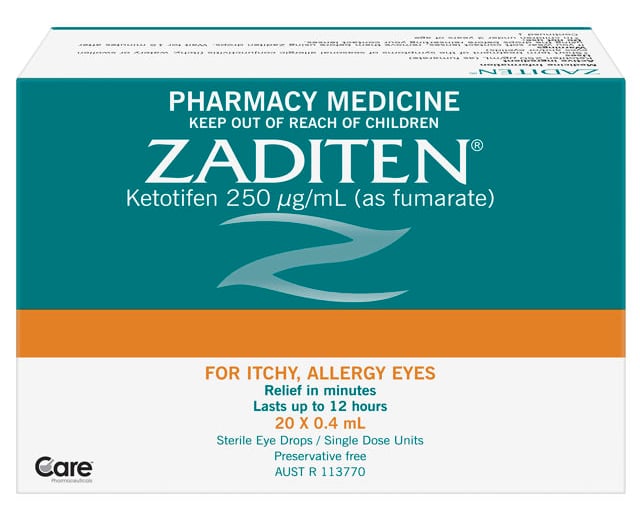
Zaditen Eye Drops For Itchy Allergy Eyes 20 vials
Zaditen Sterile Eye Drops is for the relief of itchy, allergy eyes. Preservative free, relief in minutes, lasts up to 12 hours. Zaditen eye drops are for short term treatment of the symptoms of seasonal allergic conjunctivitis (itchy, watery or swollen eyes and/or eyelids).
Disclaimer
General advice only – this information should not replace the information provided to you by your health care professional. If symptoms are severe or persist, please speak to your health care professional. Information current as of date of publishing.
Sources