



Need more on protein? Here's your protein 101

These days, “protein” is a bit of a buzz word in weight management – and honestly, for good reason. Though if you tend to picture a piece of steak when someone says protein, read on. There’s a whole lot more to this macronutrient than meats the eye.
- Along with carbohydrates and fats, protein is a macronutrient, meaning it’s one of the essential nutrients we need to consume in larger amounts to provide us with the energy our body needs to function.
- Proteins are made up of 20 amino acids. Think of these as the building blocks of protein. Amino acids join together to form chain-like structures, which make different proteins.
- Proteins all have different jobs. Some things they are responsible for include:
- Muscle and bone repair
- Hormones (carrying signals through the body)
- Enzymes (help control speed of chemical reactions in cells)
- Providing structure for cells - The body can only make 11 of the 20 amino acids that exist. This means we must obtain the other 9 through our diet.
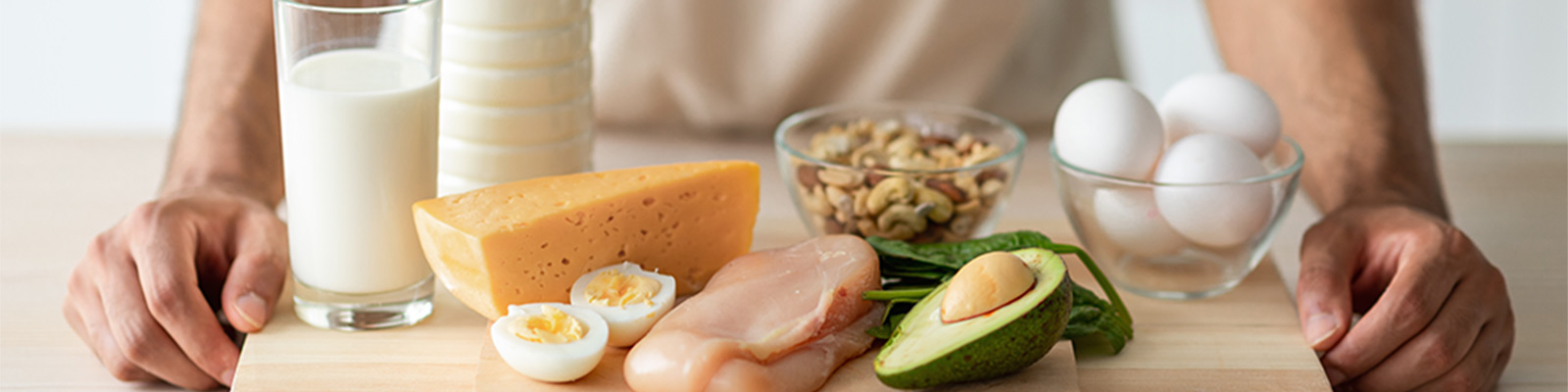
- Not all protein-containing foods are created equal. Complete proteins contain all the amino acids, while incomplete proteins contain most.
- Most animal proteins and some plant-based proteins are good examples:
- Lean meat and poultry
- Fish and seafood
- Eggs
- Dairy products
- Soy
- Quinoa
- Amaranth seeds - For incomplete proteins, snack on these:
- Nuts, nut pastes and seeds
- Legumes
- Wholegrains - Vegans can still obtain all the proteins they need from their diet but need to eat a wide variety of plant foods to do so. Tip! Combining food from different sources in one meal can help, think baked beans on toast or topping a bean stew with a sprinkling of toasted seeds.
- Need some quick high protein snack ideas? Try:
- Hummus with raw veggie sticks or wholegrain crackers
- Eggs made as you like them
- Cottage cheese with toast and tomato or as a topping for baked potato
- Nuts and seeds sprinkled over salads and soups
- Beans in salads, pasta and soups
- Greek yoghurt with fresh fruit or to replace sour cream - While it would be convenient, our body can't store excess protein and instead removes excess as waste. So, rather than bingeing on proteins, the best way to get enough is to eat small amounts with every meal.
- Very high protein diets are not recommended. They can affect the kidneys, liver and may contribute to changes in bowel habits and deficiencies in other nutrients.
- Instead, stick to the recommended guidelines. Talk to your dietician or check the Australian Dietary Guidelines for detailed information on eating well, calculating serves and more.
- High protein meal replacement shakes can be used as part of a healthy diet. There are even vegan options available. Tip: We created a shake selector tool to help you select a shake suited to your weight loss or management goals. Find your shake here.
- How much protein we need changes throughout life. Times of life that affect our kilojoule and nutritional needs include:
- Infancy and childhood
- Teenage years
- Pregnancy and breastfeeding
- Illness
- Old age