






Hayfever vs cold symptoms: what’s the difference?

People often ask me if their sneezing, runny nose and nasal congestion are caused by hayfever or the common cold. It’s easy to mistake one for the other, as the symptoms can appear very similar at first glance.
Knowing how to tell the difference between a cold and hayfever (or allergies) lies in understanding the triggers.
The common cold is caused by a viral infection, with symptoms typically developing slowly over a day or two, accompanied by general fatigue, fever, or body aches. In contrast, hayfever, also known as allergic rhinitis, is an allergic response triggered by things like pollen, dust mites, or pet hair, with symptoms manifesting much quicker.
While runny nose, sneezing and congestion are hallmark symptoms of both the common cold and allergies, there are some key differences.
Coughing, sore throat and fatigue often signal a viral infection, whereas allergy symptoms like runny nose, sneezing or a rash are usually more localised.
Hayfever also tends to flare up outdoors or when you’re exposed to specific allergens, and symptoms last as long as you’re around those triggers (without preventative treatment). A cold usually runs its course in 7-10 days, regardless of your environment (if your symptoms worsen during this time then speak to your Pharmacist).

People often ask me if their sneezing, runny nose and nasal congestion are caused by hayfever or the common cold. It’s easy to mistake one for the other, as the symptoms can appear very similar at first glance.
Knowing how to tell the difference between a cold and hayfever (or allergies) lies in understanding the triggers.
The common cold is caused by a viral infection, with symptoms typically developing slowly over a day or two, accompanied by general fatigue, fever, or body aches.
In contrast, hayfever, also known as allergic rhinitis, is an allergic response triggered by things like pollen, dust mites, or pet hair, with symptoms manifesting much quicker.

While runny nose, sneezing and congestion are hallmark symptoms of both the common cold and allergies, there are some key differences.
Coughing, sore throat and fatigue often signal a viral infection, whereas allergy symptoms like runny nose, sneezing or a rash are usually more localised.
Hayfever also tends to flare up outdoors or when you’re exposed to specific allergens, and symptoms last as long as you’re around those triggers (without preventative treatment).
A cold usually runs its course in 7-10 days, regardless of your environment (if your symptoms worsen during this time then speak to your Pharmacist).
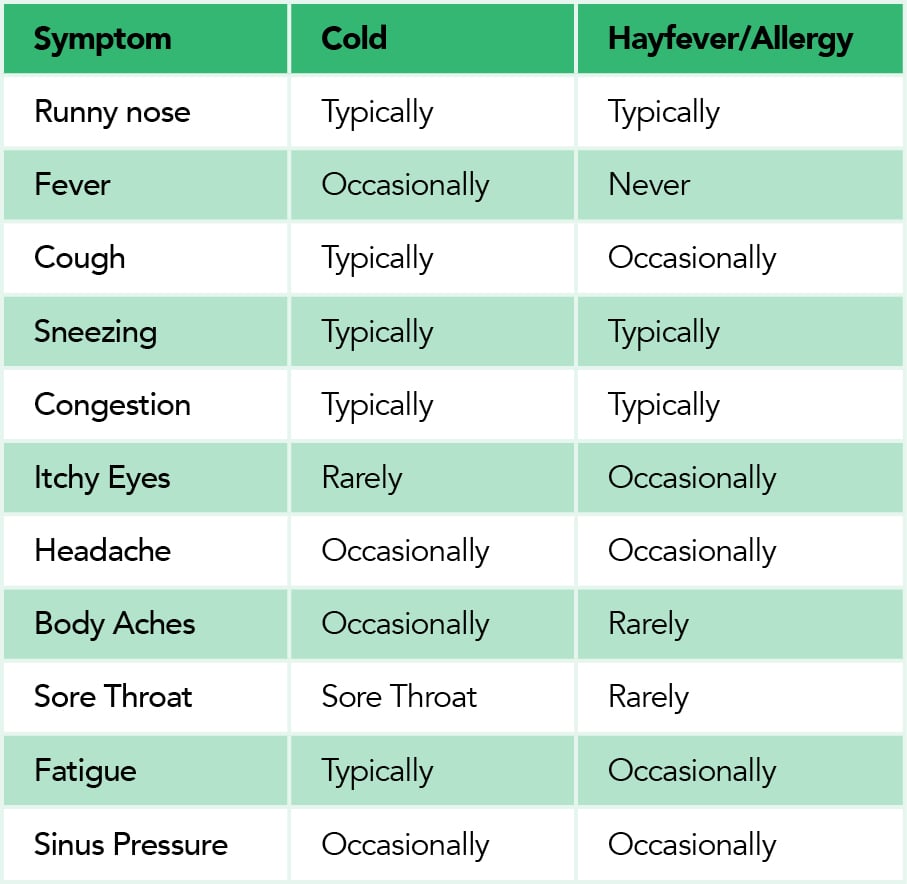
Here’s a handy checklist of common cold vs hayfever symptoms.
Symptom | Cold | Hayfever/Allergy |
|---|---|---|
Runny nose Fever Cough Sneezing Congestion Itchy Eyes Headache Body Aches Sore Throat Fatigue Sinus pressure | Typically Occasionally Typically Typically Typically Rarely Occasionally Occasionally Typically Typically Occasionally | Typically Never Occasionally Typically Typically Occasionally Occasionally Rarely Rarely Occasionally Occasionally |
Here’s a handy checklist of common cold vs hayfever symptoms.
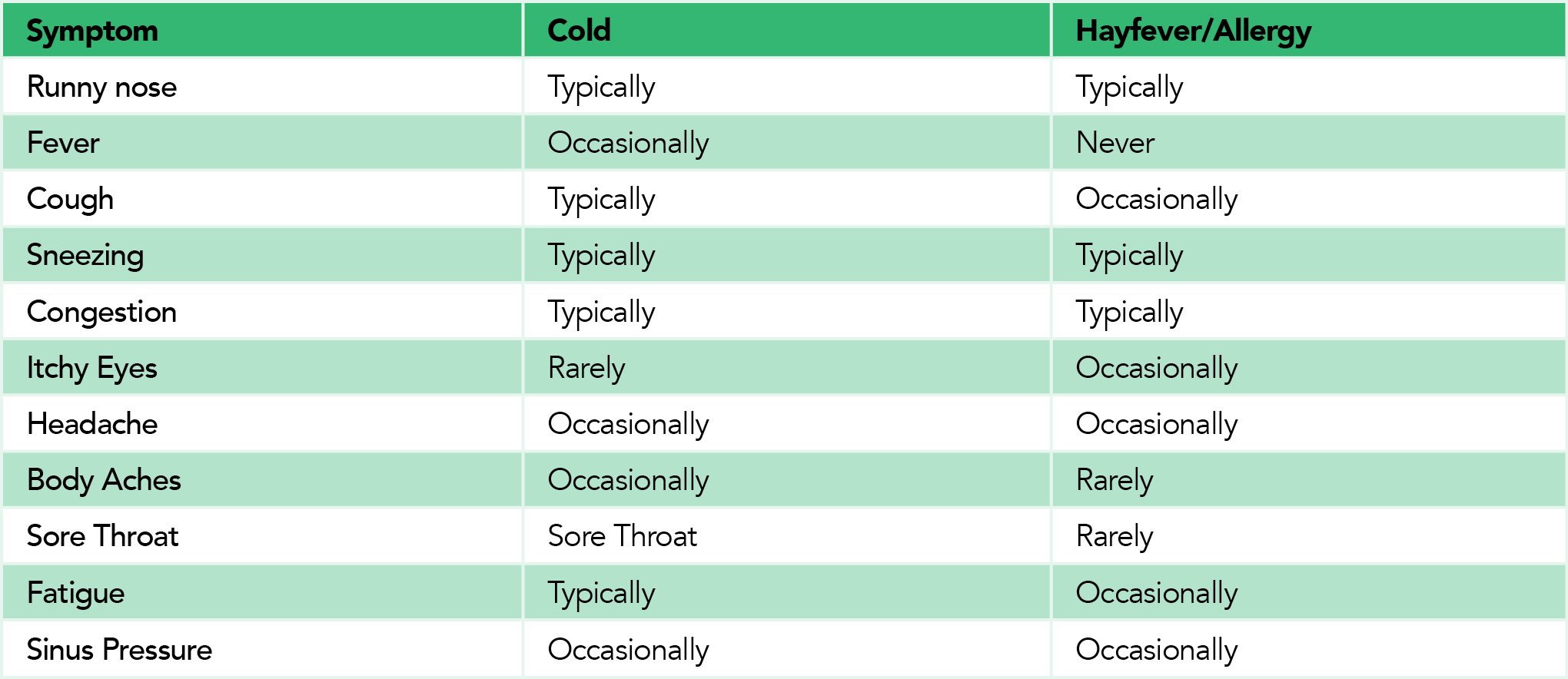
Here’s a handy checklist of common cold vs hayfever symptoms.

Wendy McKay
Pharmacist
TerryWhite Chemmart
Drouin, VIC
If you experience frequent cold-like symptoms throughout the year, ask your Pharmacist whether your symptoms might actually be hayfever.
We usually recommend a combination of products (‘dual-product therapy’), such as antihistamines and corticosteroid nasal sprays, to target different symptoms.
Talk to your Pharmacist to discover which combination of products can help.
If you experience frequent cold-like symptoms throughout the year, ask your Pharmacist whether your symptoms might actually be hayfever.
We usually recommend a combination of products (‘dual-product therapy’), such as antihistamines and corticosteroid nasal sprays, to target different symptoms.
Talk to your Pharmacist to discover which combination of products can help.
Wendy McKay
Pharmacist
TerryWhite Chemmart
Drouin, VIC