




Supervised Rapid Antigen Tests (RATS) prior to travel
- You must bring your passport to your appointment -
What is a supervised Rapid Antigen Test (RAT)?
A supervised RAT is a RAT self-test performed in the presence of a pharmacist. Following the test, you will receive a certificate confirming:
- Your pharmacist was a witness
- The test took place at a certain time and date
- The result of that test
It is not the same as a RAT test performed by a health professional in a supervised environment.
When would I need a supervised Rapid Antigen Test (RAT)?
Some countries require travellers to provide a supervised RAT certificate at the time of entry. If this is your case, you will need to provide this document when travelling internationally to such destinations. It is the responsibility of the traveller to prepare the appropriate documentation to meet all the criteria of the country they want to visit.
Australian states and territories requiring testing before domestic travel will accept pharmacist-supervised RATs. Always check with the airline, as requirements are constantly being updated.
Can I bring my own Rapid Antigen Test (RAT)?
To ensure storage conditions have been maintained, you must perform your self-test with the RAT test purchased at TerryWhite Chemmart at the time of the service. Ensure you have read the instructions before beginning your self-test.
Services Fees:
Our pharmacies will charge a service fee for the supervision and a Rapid Antigen Test must be purchased in-store at the RRP.
*Please note: Supervised Rat Tests are only available at selected stores. There may be a service surcharge on weekends, public holidays or after hours.
Rapid Antigen Tests (RATS)
What is a Rapid Antigen Test?1
Rapid Antigen Tests can be used at home to check if you may have COVID-19. Most Rapid Antigen Tests will provide you with a result in 15 to 30 minutes. Do not eat or drink 30 minutes before doing a saliva Rapid Antigen Test.
These tests are faster but less accurate than a standard polymerase chain reaction (PCR) test that you can get at a COVID-19 testing site.
There are currently two types of Rapid Antigen Tests available:
• Saliva - this test involves spitting into a tube or sucking on a swab
• Nasal swab - this test involves swabbing each nostril
How do Rapid Antigen Tests work?
Antigens are proteins found on the surface of viruses that are recognised and targeted by the immune system. An antigen test looks for antigens in a sample, to check if a person is currently infected with a specific pathogen, in this case SARS-CoV-2.2
How accurate are rapid antigen tests?3
RATs can detect COVID-19 during the ‘acute’ phase of infection — especially just before you show symptoms and in the week after symptoms first appeared. But they’re still not as reliable as PCR tests.
When to use them
Rapid Antigen Tests can be used:
- if you have symptoms
- are a contact of someone who has tested positive for COVID (household, education, workplace or social)
- if you want to quickly check if you may have COVID-19
- as part of a surveillance program such as one organised by your school or employer
Note: in some situations — such as to meet international travel requirements — having a PCR test may be your only option.
How to use Rapid Antigen Tests
There are multiple brands of RATs. It is important to read and follow the instructions for each brand to ensure you get an accurate result. Ensure the test hasn’t passed the expiry date.
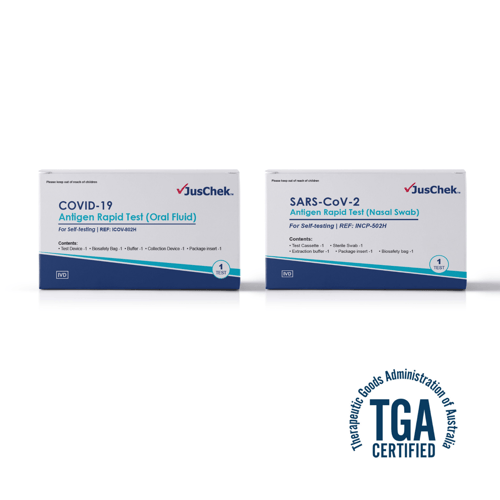
TerryWhite Chemmart offer the following RATs:
(image for illustration purposes only)
JusChek Rapid Antigen Test Nasal
JusChek Rapid Antigen Test Oral
Cellife Rapid Antigen Test Nasal

Rapid Antigen Tests for children4
Some types of Rapid Antigen Test kits can be used to test children, but not all are suitable for young children and babies. Adults should always do tests for children or supervise children who are doing a test. Read the instructions that come with the kit before using the test on the child or baby.
Here are video tutorials of a parent giving a child a RAT .
o https://twitter.com/DrEricLevi/status/1480495377237168131
o https://www.coronavirus.vic.gov.au/rapid-antigen-testing-schools
How to interpret the results5
Most home use test kit results will be shown in a window and the instructions provided with the test will explain what the result means. As an example, the results could look like this:

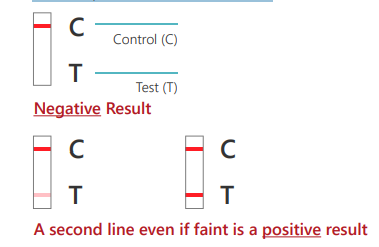
NOTE: COVID-19 testing rules have changed in most states and territories. You no longer need a PCR test to confirm a positive result from a rapid antigen test (RAT). 6 Check state department websites for the most up to date information.
What do I do if I get a positive result?
Contact your state or territory health department to find out about quarantine requirements.
See table below for a summary of the actions required for each state. The rules are constantly changing so please check your state or territory health department websites for the most up to date information.
Positive RAT - Report the result
NSW
Register your positive test online - https://www.service.nsw.gov.au/transaction/register-positive-rapid-antigen-test-result.
If you or someone in your family can’t register online, please call Service NSW on 13 77 88
More information: https://www.health.nsw.gov.au/Infectious/factsheets/Pages/advice-for-confirmed.aspx
QLD
SA
Report your result within 24 hours – here https://forms.sa.gov.au/#/form/61d8bc18ad9c585180ab5454/app/61e691554d43314754302b61
More information here: https://www.sahealth.sa.gov.au/wps/wcm/connect/public+content/sa+health+internet/conditions/infectious+diseases/covid-19/testing+and+tracing/rapid+antigen+testing+rat+for+covid-19
WA
Anyone who returns a positive RAT result must immediately seek a diagnostic COVID-19 nose and throat PCR test.
More information: https://ww2.health.wa.gov.au/~/media/Corp/Documents/Health-for/Infectious-disease/COVID19/COVID19-Testing-Criteria-for-SARS-CoV-2-WA-34.pdf
ACT
Report your positive test result here - https://actredcap.act.gov.au/redcap/surveys/?s=ENJETRYNA8CHAFJ7
If you are unable to complete the form or you need help, please call 02 5124 6500 between 8am and 6pm
More information: https://www.covid19.act.gov.au/stay-safe-and-healthy/rapid-antigen-test-rat-positive-result-registration-form
TAS
Register your positive test result here https://www.coronavirus.tas.gov.au/keeping-yourself-safe/information-for-positive-cases
More information: https://www.coronavirus.tas.gov.au/important-community-updates/rapid-antigen-testing
What do I do if I get a negative result?
If you get a negative result, it is less likely that you have COVID-19 but you still need to follow all public health advice on limiting the spread of COVID-19.
If you feel unwell or have symptoms contact your state or territory health department to find out about what you should do.
What do I do if I get an ‘invalid’ result?
As well as positive and negative results, a test may produce an ‘invalid’ result, which means it has not worked correctly. If this happens, you should throw the test away and either perform a new test.
Supervised Rapid Antigen Tests for travel
1. Service is $44.95 + purchase of RAT in-store
2. Pre-departure testing requirements (including certification requirements) are set by an individual country. Travellers should check requirements of the airline and the country they are travelling to and confirm that pharmacist certification is accepted if a test is required.
3. Travellers should check requirements of the airline and the state and territory health department for where they are travelling and confirm if testing is required
4. Point-of-care testing (ie. RAT service that is physically conducted by health professionals or trained people working under supervision) is outside the scope of this service
5. Consumers who request this service must be informed that the accuracy of the result is subject to the limitations of the test, the ability for the consumer to comply with manufacturer’s instructions and the health status of the person being tested, at the time of the test

Please do not come into the pharmacy for this service if you have any signs or symptoms of COVID-19, or if you have been a close contact.