


Tips to make your child's vaccinations a breeze


Preparing your child for a vaccination can leave many parents feeling uncertain. You might wonder about your role, what you can do, or if you can make a difference at all.
But did you know that, as your child's trusted adult, you play a key role in creating a calm—even positive—vaccination experience? Here are some practical steps you can take before, during, and after their vaccination to help make it a routine part of life rather than something to fear.
1. Before the vaccination


Be open about the vaccination
Talk to your child calmly and honestly, using age-appropriate language to explain why vaccinations are important. You might find it helpful to use familiar analogies, such as:
- “A seatbelt helps protect our body in the car, and our vaccination helps protect our body against some diseases.”
- “You know how we need to keep practicing to beat the other team at soccer? Well, a vaccination helps our body practice, in case it needs to play a game against a disease. It helps it get ready to win.”
- “A vaccination is like a guide to beat the big boss, just like you do in your video games. You could beat the boss alone, but the guide makes it much easier.”
- “You know how we put on sunscreen, to protect our skin so it’s harder for us to get burnt? Well, the vaccine makes it harder for our body to get sick.”
Choose not to mention pain
Children are often most concerned about the pain, which is completely understandable. To ease their worries, try using gentler words instead of “pain,” “hurt,” or “blood.” Words like discomfort, pressure, pinch, or an uncomfortable feeling can make a big difference. For example, you might say, “You might feel a little discomfort, but it will be over very quickly.”
You can also help your child feel more in control of the experience. Instead of saying, “I know it’s going to hurt,” try, “You're the boss of your body and mind. You might feel something, or you might not. What if you decide not to notice it? What do you think?” This approach empowers them and can make the experience feel less intimidating.


Engage with friends and family
Other people in your circle can help motivate and provide support. Does your child have an older sibling, cousin or family friend who's been vaccinated recently? They may feel reassured by another child's story of having a vaccination and being “brave” - then feel inspired to be brave, too! You could even suggest that your child bring along a special support person on the day.
Offer a reward
Who doesn't like a treat? Suggest they pick dinner that night or a special toy or book from a nearby shop.
Other special treats could be a visit to a café, the park, pool or a friend’s house, a movie night, fresh art supplies or a playdate with a good friend.
2. During the vaccination
Go in confidently
Your child trusts you and will be looking to you for emotional guidance on how to react to the situation.
So, walk into the pharmacy positive and calm, with a warm smile. Introduce your child to the pharmacist as a superstar (because they are 😊).
As you move into the clinic room, your child may continue to monitor you for anxiety cues, so try to breathe deeply and remain calm.







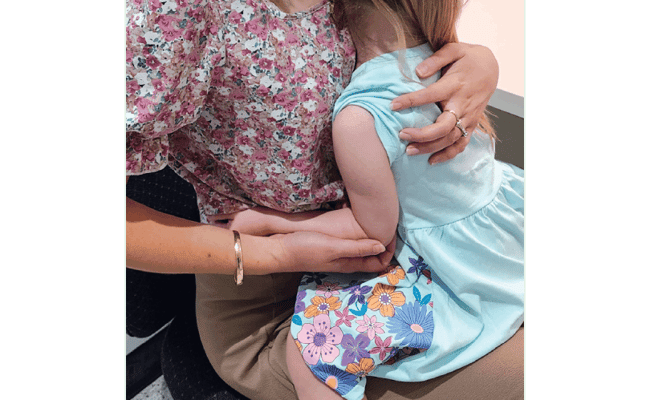
Help them take a comforting position
The way your child sits during a vaccination does wonders. Remember: It isn’t good practice to restrain or hold your child down. Instead, use your trusted relationship with them to hold your child in a way that makes them feel comfortable and safe. Here are some ideas:
Cuddle position for infants and young children
- Sit your child in a sideways position on your lap, reclining them gently
- Hold their inside arm and leg against your side
- With one hand, hold their outside arm gently but firmly
- On the other hand, hold their outer leg and gently flex their knee. This relaxes the muscle, ready for the vaccination.
Cuddle position for older children
- Sit your child in a sideways position on your lap, reclining them gently
- Tuck their legs between your knees
- Have your child “hug” their inner arm under your armpit and around your back
- Hold their outer arm at the elbow, gently but firmly
Straddle position – chest-to-chest
- Your child sits chest-to-chest on your lap, their legs on either side
- They can hold their arms to your chest as you hug them
- Otherwise, your child wraps their arms around you, while you hug them back, holding their arms to their sides, gently but firmly
Distraction is key
Depending on your child's age, you could pack a special toy, book or favourite blanket to cuddle during their vaccination. Other ideas include watching a short video on your phone or talking to them softly. You may even want to blow bubbles, sing a song or tell them a story. Maintain eye contact and reassure them they're doing a great job and everything will be finished soon.
3. After the vaccination


Let them choose
The reward process begins as soon as the vaccination is over. Giving your child control over small decisions helps them feel empowered. If your pharmacist offers a choice of a bandage or a lollipop, let them pick—it’s a well-earned treat!
Continue to comfort
Provide plenty of positive reinforcement, praise their bravery, and give lots of cuddles. This helps turn the experience into a positive one, making future vaccinations easier. Every child reacts differently, but it’s important never to scold them. Instead, ask how they’re feeling so you can better prepare for next time.
Celebrate their bravery
Wherever you go that day, acknowledge your child’s courage! Encourage them to share their experience with friends and family. Their story might even help another child feel more confident about getting vaccinated.


