







Scars
What is a scar?
When we sustain an injury to the skin, our body responds by repairing the tissue, which results in scar tissue. The way your body repairs itself and the extent of the injury will influence the kind of scar you have. Most wounds, except very minor ones, result in some degree of scarring. 1 Scar tissue is mainly made up of a protein called collagen. Scars can be all shapes and sizes, and some may be painful.2 Over time, most scars fade, but there are also treatments that can help reduce the appearance of scars.
Types of scars
There are different types of scars, which may depend upon the type of injury sustained and the type of skin a person has. The main types of scars include3:
Sometimes scar tissue can occur inside the body, particularly after surgery. These types of scars are called adhesions.
What causes scars?
Nearly everyone develops some type of scar. There are numerous causes of scars including9:
- wounds and injuries
- burns
- skin conditions such as acne and chickenpox
- insect bites
- piercings
- tattoos
- surgery
- pregnancy
- weight gain or weight loss
The appearance of your scar depends on10:
- what caused the scar
- size, severity and location of the wound
- type of wound care you received
- age
- ethnicity
- genes
- overall health
How do scars form?
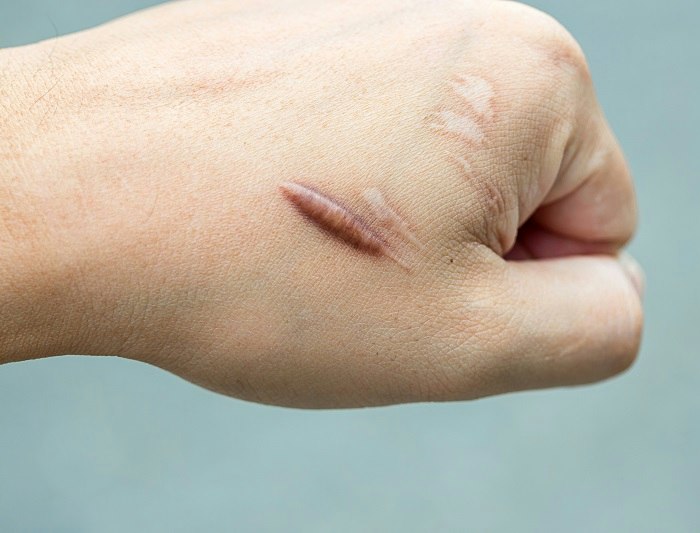
For a scar to form, the wound must be deep enough to injure the dermis (inner layers of your skin). To repair the damage that goes beyond the first layer of skin (epidermis) your body makes tissue that is thicker than your regular skin tissue. This is what becomes a scar.
New scars are usually pink or reddish in colour. However, as a scar matures it may become lighter or darker than your skin.
What are the complications of scars?
Most scars don’t cause any problems. However, problems can arise if the scar is itchy or painful, or makes movement difficult. 11 Some scars, particularly large ones, or ones on the face can cause emotional distress as well.12

What can you do to reduce the appearance of scars?
As it’s not possible to completely remove a scar, treatment aims to reduce the appearance of it. There are many methods used to improve the appearance of scars which include:13
- Topical treatments — Applying over-the-counter (OTC) products from your pharmacy such as vitamin E cream, cocoa butter, silicone gel, special oils, products containing onion extract and other commercial skin products may help heal scar tissue.
- Corticosteroid injections — Corticosteroid injections may be used to help flatten raised scars or reduce pain and itchiness.
- Dermabrasion — Removing the surface of the skin may be used for raised or depressed scars. Microdermabrasion is usually used for more superficial scars.
- Laser treatment — This treatment works by removing the top layer of the scar and helps stimulate the formation of new collagen. Some types of lasers can treat the colour of the scar to make it less visible.14
- Filler injections — Fillers are used to build up depressed scars although results are only temporary and regular treatment may be necessary.
- Microneedling — This procedure involves making small punctures in the superficial skin to stimulate the production of collagen and reduce the scar’s appearance.
- Cryosurgery — Scars may be frozen to reduce pain, itchiness, and discolouration and to soften hard scars.
- Surgery — Surgery can be used to alter the shape of a scar or to make it less noticeable, although it’s not recommended for keloid scars due to the risk of recurring scars or the development of more severe scars.15
- Radiotherapy — Low-dose radiotherapy may be used as a way to prevent the recurrence of severe keloid or hypertrophic scarring. However, there is a risk that this treatment may cause cancer later on, so very few patients receive this treatment.16
When should you see your doctor about your scars?
Most scars won’t cause any problems. However, if you have a scar that is itchy, painful, prevents normal movement, or causes you emotional distress see your doctor. They will be able to refer you to a dermatologist who can assess your scar and provide appropriate treatment.
Can you prevent scars?
While you can’t always prevent scars, receiving the correct wound care can help to reduce the size and severity of a scar. If you sustain a wound or injury you should17:
- visit your doctor if you have a wound that is likely to leave a scar, as stitches or bandages to hold the skin together can minimise scarring
- keep your wound clean to prevent infection
- if you think the wound is infected visit your doctor as you may need antibiotic treatment
- keep the wound moist with special wound dressings while it heals as dry scabs can make scarring worse
- use sunscreen on your scars or cover up when in the sun as UV exposure can darken scars
- eat a healthy, balanced diet as low levels of vitamin C or D and low protein intake can make it harder for skin to heal well
- avoid squeezing pimples
- seek treatment if you have a skin condition to reduce itching and inflammation
How TerryWhite Chemmart can help
Your local TerryWhite Chemmart pharmacist is available to help you manage your health. We have a wide range of wound care products to treat wounds and reduce the likelihood of scarring, as well as topical products that may help reduce the appearance of your scars. Speak to your TerryWhite Chemmart pharmacist about your scars so we can recommend products and medications that may be suitable for you.