






How can I explain allergies? (And other questions about children’s hayfever)

Why does your child have hayfever while your friend’s doesn’t? How can you explain allergies to a small child bothered by their symptoms? And how can your Pharmacist help with all this? Read on for more.
These factors can make hay fever more common:
- A family history of hay fever
- A family history of eczema
- Having other allergies (e.g., foods)
- Living in an environment with multiple potential allergens
What are the complications of hayfever?
When untreated, hay fever can be associated with other health conditions, and can:1,2
- Lead to poor-quality sleep
- Contribute to tiredness or daytime sleepiness
- Be a risk factor for asthma or make it more difficult to control
- Lead to recurring ear infections
- Cause eye infections (due to rubbing itchy eyes)
Ask your Pharmacist for children’s antihistamines, nasal sprays and other options. Find further tips on managing hayfever at home here.
Your Pharmacist can help you manage your hay fever and allergies day-to-day.
Talk to your doctor if your symptoms are:
persistent (at least four days of symptoms a week, for four weeks or more)
moderate to severe (getting in the way of your ability to sleep, work or go about your daily activities)

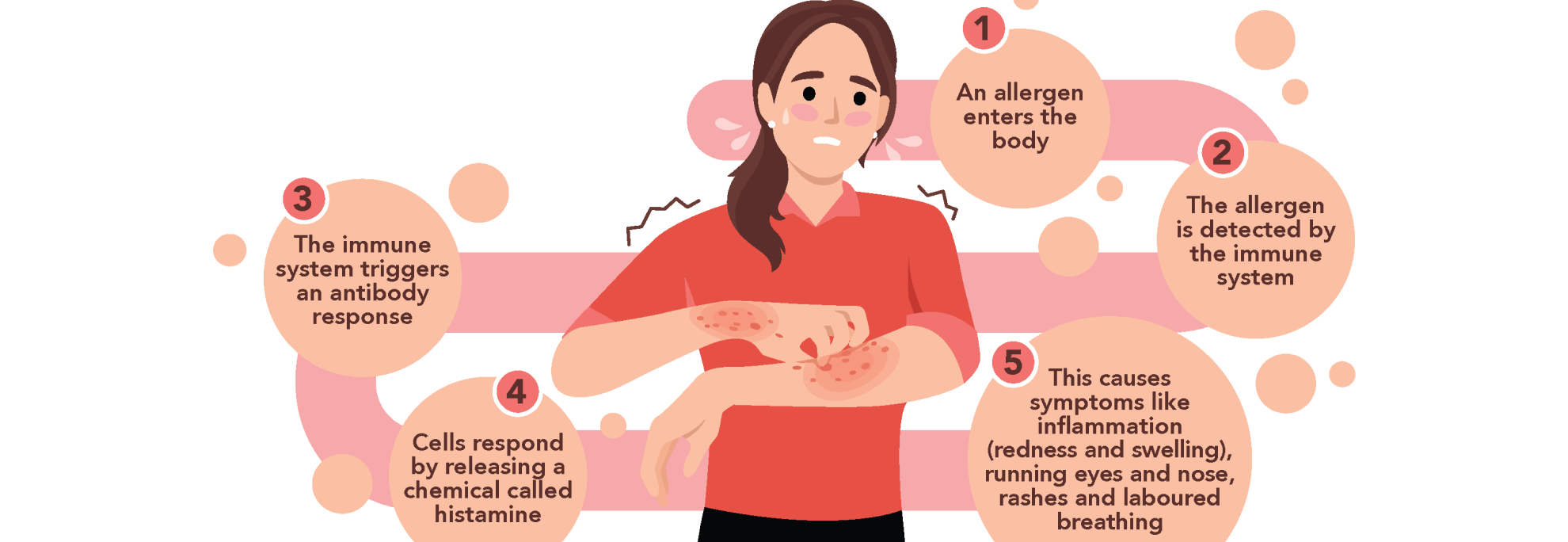
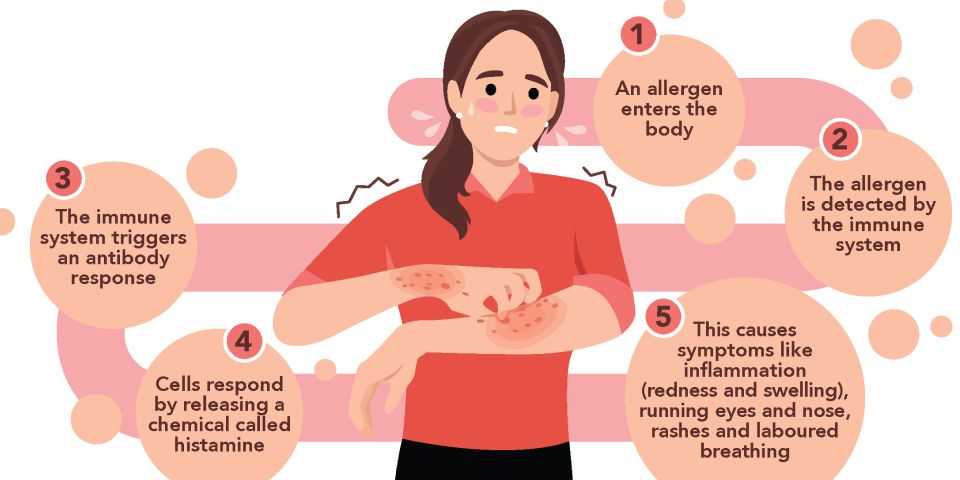
How can I explain allergies to my child?

When it comes to explaining things to children, as with most life lessons, try giving your child a simple, truthful explanation.
You might explain hayfever simply, such as:
“Hay fever is when your body thinks pollen will hurt it, even though it won’t really. Imagine your nose and eyes have alarms and when pollen touches them, the alarms go off and you get that annoying sneeze and watery eyes. You can take a special medication to help your body relax. We can also do things to try to stay away from what bothers your body. You’re not the only person this happens to, but it is frustrating, isn’t it? We’ll help you out, don’t worry.”
Personalise this to suit your little’s one’s experience, by swapping hay fever for allergies and pollen for eggs, dust, dog hair or whatever is true for your family.