





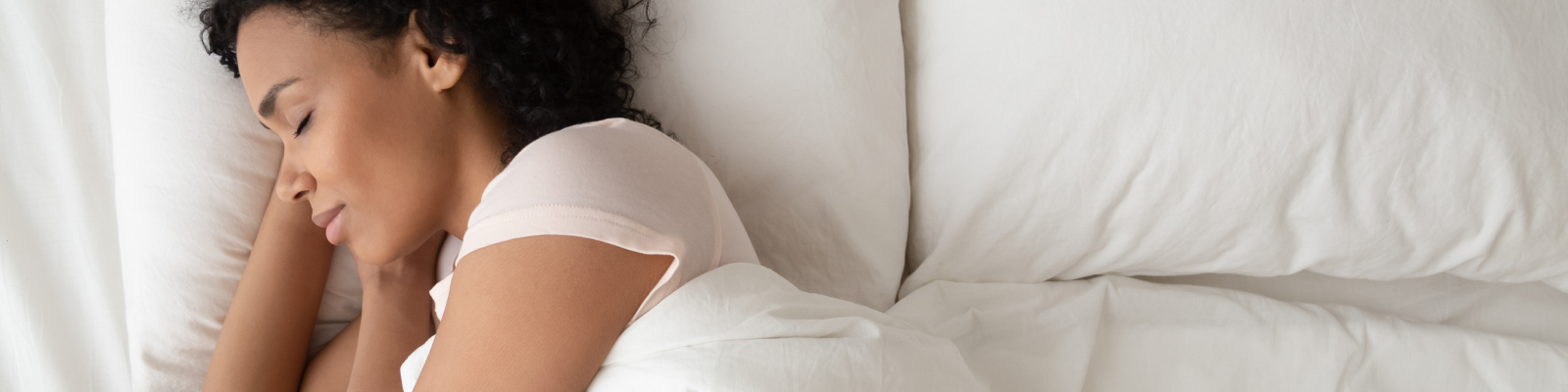
Here are eight of our favourite tips for better sleep

It’s well-known that sleep is essential for health and wellbeing. It has a direct influence on energy levels, mood, memory, the immune system and stress management – but isn’t limited to just these areas. While all of us have experienced a sleepless night, 4 in 10 Australians regularly experience inadequate sleep, many thinking this is “normal.”1
Often, anxiety about your sleep can create a vicious cycle. This is actually a form of performance anxiety, where the worry of whether you’ll sleep well causes more poor sleep and continues the cycle.
How can I get better sleep?
Before turning to medication, remember there are other ways to support yourself towards better sleep. Here are eight things I like to suggest:
1. Remember sleep isn’t binary.
Great versus awful are not the only two ways we can sleep. Remember you may sleep fine, good enough or better than yesterday.
2. Know yourself.
Many people have absorbed that eight hours is the ideal, but that isn’t the case for us all. Try not to prescribe strict rules about how much sleep is enough sleep – and listen to your body instead.
3. CBT and mindfulness.
Cognitive behaviour therapy can help reframe your thinking around sleep, while mindfulness can help us focus on the present moment when anxiety creeps in.
4. Set worry time.
If you tend to worry in bed, set yourself “time to worry” during the day. Importantly, don’t do this in your bedroom or close to bedtime.
5. Don’t blame sleep for everything.
A poor night’s sleep isn’t always the reason for things going wrong. Remembering this helps take the power away from sleep.
6. Consider the root.
Rather than catastrophising (“I’ll never sleep again!”) consider what could be at the root (“I’ve been stressed about doing my tax return. I’ll put aside a morning next weekend to get it done.”)


James Georgiou
TerryWhite Chemmart
Gawler, SA
7. Keep up the sleep hygiene.
Limit night-time screens, get enough exercise, eat a light evening meal, avoid late-night alcohol, block out light and sound, keep your bedroom cool.
8. Talk to your Pharmacist.
If you do need support, there are plenty of sleep supplements with natural sleep aids in their ingredients. Some over-the-counter options are available, including a form of melatonin for people over 55.2
Also, why does everyone mention melatonin?
Ohhh, because it’s clever stuff. Along with the body’s circadian rhythm or internal clock, melatonin helps control the body’s day and night cycles. Here’s what you should know.2
- Melatonin is a hormone the brain produces naturally, which helps calm the body before bed.
- Your body produces more as darkness falls and levels then decrease in the morning as it gets light.
- You can help adjust your melatonin levels naturally by avoiding bright lights, limiting screens before bed and avoiding caffeine and alcohol, especially later in the day.
- Melatonin can be prescribed to help with sleep problems and, unlike sleeping pills, shouldn’t lead to dependency or daytime grogginess.
- However, some side-effects are associated with supplementation. Speak with your Pharmacist about whether melatonin is suitable for you.
Sources:
1. https://www.beyondblue.org.au/mental-health/sleep
2. https://www.healthdirect.gov.au/melatonin#what-is
https://www.sleephealthfoundation.org.au/anxietyandsleep.html
https://www.cci.health.wa.gov.au/~/media/CCI/Mental-Health-Professionals/Sleep/Sleep---Information-Sheets/Sleep-Information-Sheet---03---Insomnia-and-Your-Thinking.pdf