






What’s the importance of bowel health - and how can I improve mine?

While we may not talk about it every day, our bowel health is something we should all consider more regularly. Understanding our daily habits and eating a diet rich in fibre are two ways to help maintain tip top gut health. Read on to find out more about the signs of an unhealthy gut, the most important symptoms to keep in mind and what you can do to help.
Signs of an unhealthy gut
Not sure how your bowel stacks up? A number of symptoms can suggest an unhealthy gut. These include:
- An upset stomach – including bloating, gas, constipation and diarrhoea.
- Unintentional weight change – decreased nutrient absorption or small intestinal bacterial overgrowth can result in weight loss and gain
- Sleep issues – most of our body’s serotonin (a hormone essential for sleep) is processed in the gut
- Skin irritation – food allergies and inflammation in the gut may go on to cause conditions such as eczema
- Immune system alteration – it’s believed there’s a connection between poor gut health and the improper functioning of the immune system
- Food intolerances – difficulty digesting certain foods can create bloating, gas, diarrhoea, abdominal pain and nausea
What other symptoms should I know about?
Some symptoms are concerning as they can be early indicators of bowel cancer. Speak to your GP immediately if you experience:
- Bleeding from your bottom or blood in your bowel movements, even if only occasional
- A change in bowel habits for longer than two weeks, such as:
- Going to the toilet more frequently
- Constipation
- Loose or watery bowel movements
- Feeling that the bowel does not completely empty
- Bowel movements that are narrower than usual - Frequent gas pains, bloating, fullness or cramps
- Persistent and severe abdominal pain, which has come on recently for the first time
- A lump in your stomach or rectum
- Unexplained feelings of tiredness, breathlessness or a lack of energy
- Unexplained weight loss or vomiting
Remember to view your poo
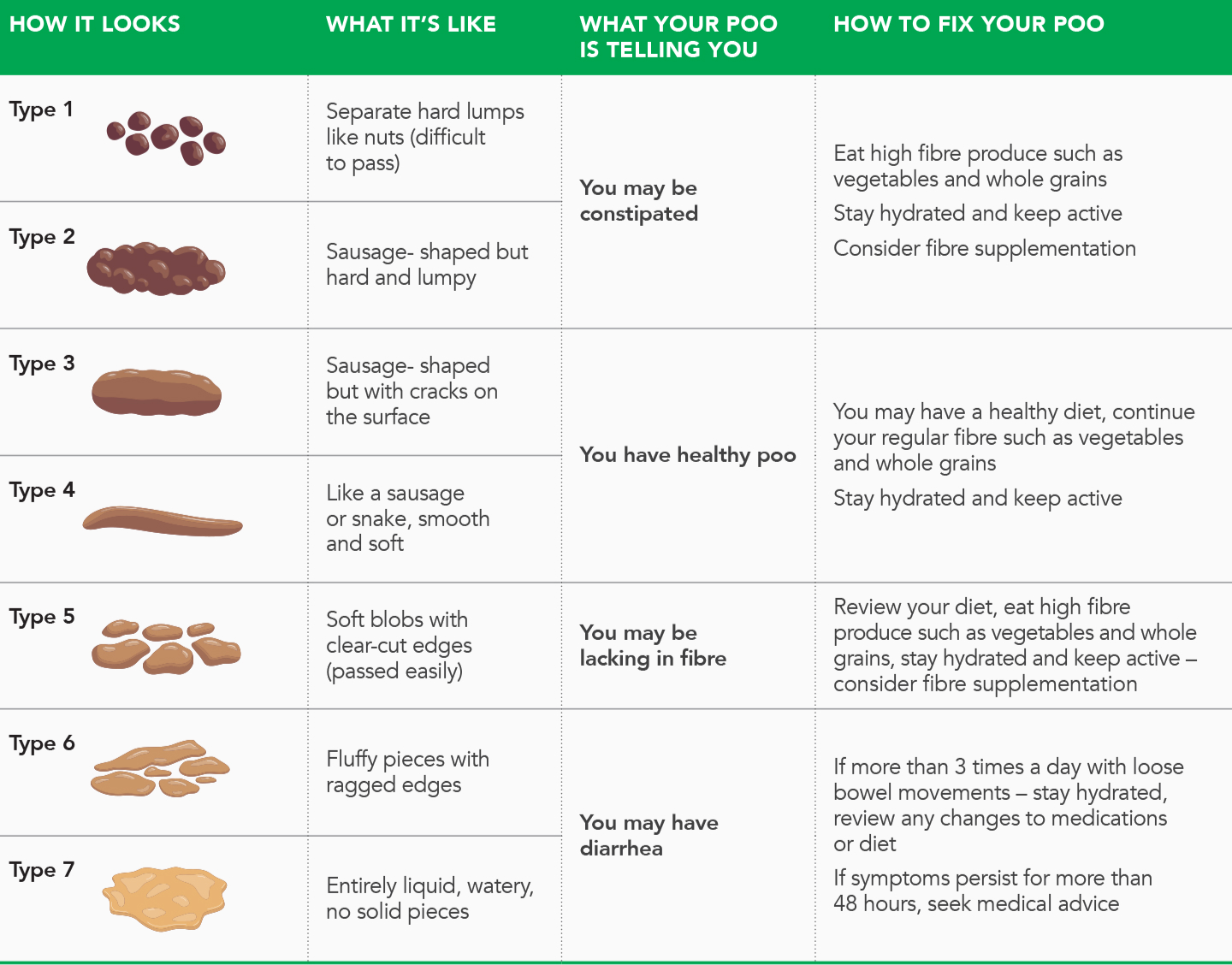
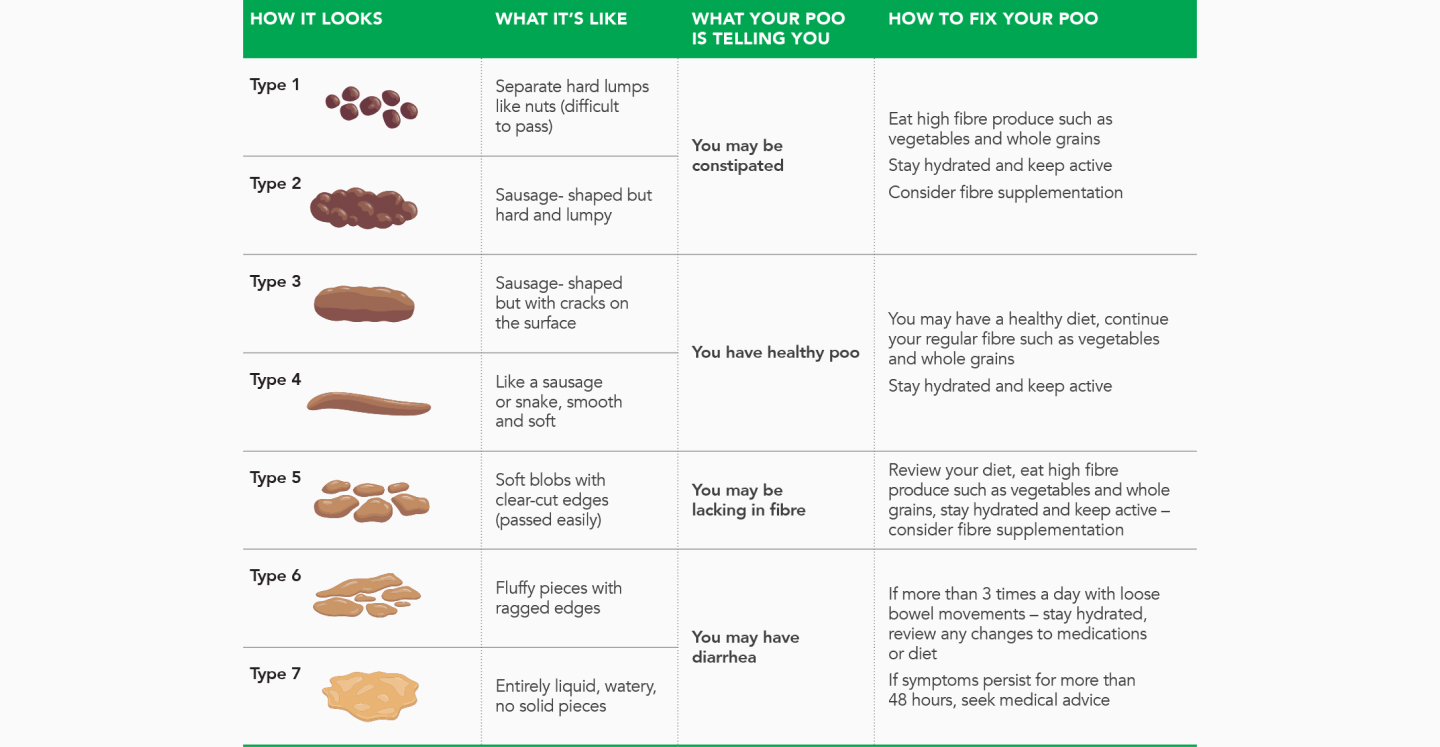
The Bristol Stool Chart is an easy way to see what your bowel habits could be telling you. The numbers associated with each type of bowel motions make explaining symptoms to your GP or healthcare provider simple. So, don't shy away - view your poo! If you notice blood or any symptoms that are unusual for you, talk to your GP.


How fibre helps our digestive health
When more serious complications are ruled out, fibre can help relieve the symptoms of an unhealthy gut. This wonder nutrient helps bulk up stool, keep it moving through the intestines.
How much fibre do I need?
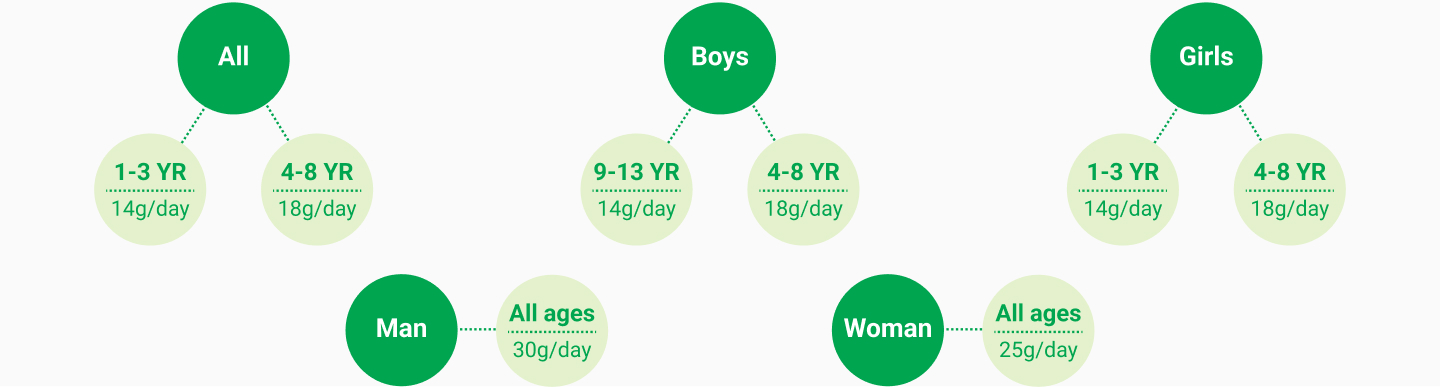
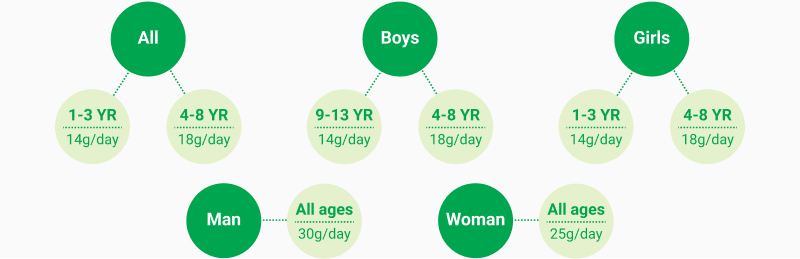
These are the recommended intakes for children and adults1


Need to up your fibre? Try these foods:
- Fruits and vegetables - especially bananas, broccoli, pear, apple
- Legumes - think chickpeas, lentils, split peas and beans
- Breakfast cereals with barley, wheat or oats
- Wholemeal or multigrain bread
- Dried fruit and nuts
- Brown rice
Need extra support?
If, despite eating a variety of high-fibre foods, your doctor feels your digestion needs extra fibre support, they may recommend a product such as Metamucil. Metamucil contains a gel-forming fibre called psyllium husk which helps trap and remove waste from your body and can help reduce the heavy sensation of slow digestion so you can feel lighter and more active.



