




About 4 million Aussies suffer from seasonal allergies each year.1

If you’ve had hayfever, then you will recognise the feeling of being congested and constantly sneezing. When pollen and dust strike, it can feel as though your nose will never stop running.
There are many triggers for hayfever – common ones include pollens, dust mites, animal dander and moulds. Whatever your trigger, these tiny particles can enter your nose and cause hayfever. People young and old suffer from hayfever symptoms. For some, the congestion, sneezing and runny nose last for a few days; for others, it can last for months.
What can be done to relieve symptoms?
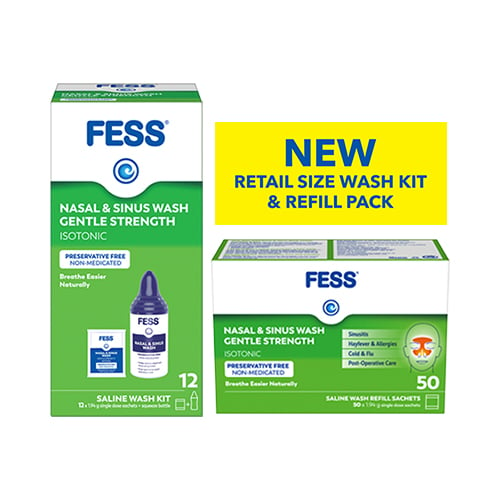
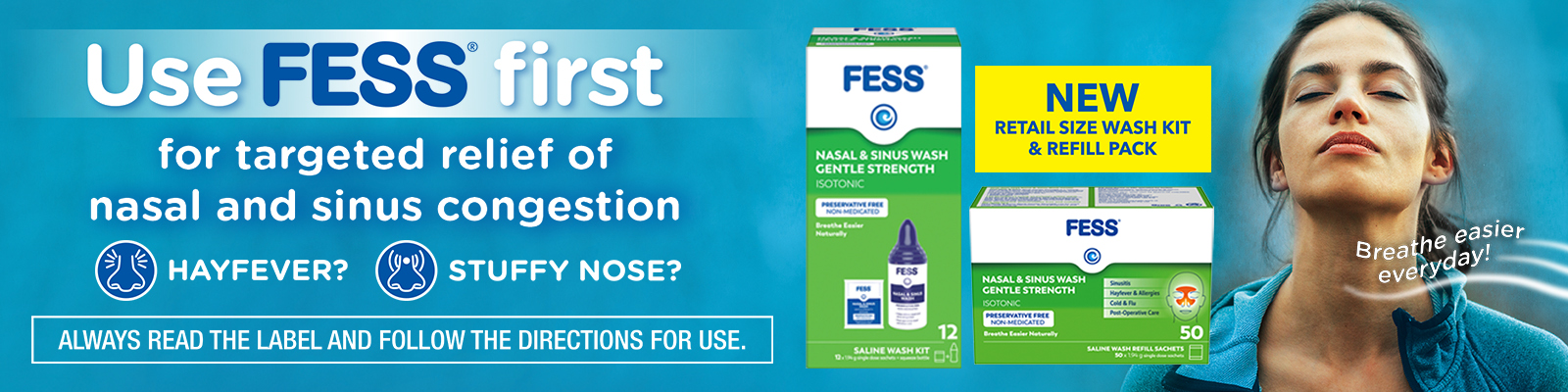
If you’re a sufferer, one way to help reduce your symptoms is to wash away the allergens that cause the problem in the first place. FESS is a natural, gentle way to help relieve nasal congestion.
The non-medicated FESS range of nasal saline helps to wash away dust, pollen and other allergens that can cause hayfever.
Once they are washed away, you are less likely to experience the symptoms of hayfever.
But you can take things a step further. You can use FESS saline sprays or washes before a medicated nasal spray to help clear mucus from your nasal passages, which in turn improves the penetration of the medicated nasal spray. This improves the efficacy of the medicated spray2
FESS also helps to support normal ‘mucocillary flow’ – the nose’s natural defense mechanism – by thinning the nasal mucus so that it flows more easily. The tiny hairs inside your nasal passages combined with mucus help traps and remove dust, pollen, bacteria and other pollutants from the air we breathe. Using FESS daily helps keep this system in optimum condition.
Your nose is the first line of defense against allergens and other nasties so it is important to look after it.
ALWAYS READ THE LABEL AND FOLLOW THE DIRECTIONS FOR USE.
1. Australasian Society of Clinical Immunology and Allergy Limited 2013 http://www.allergycapital.com.au/allergycapital/allergies_in_australia.html
2. Papsin B and Mctavish A. Can Fam Physician 203: 49:168-73